2026 Program
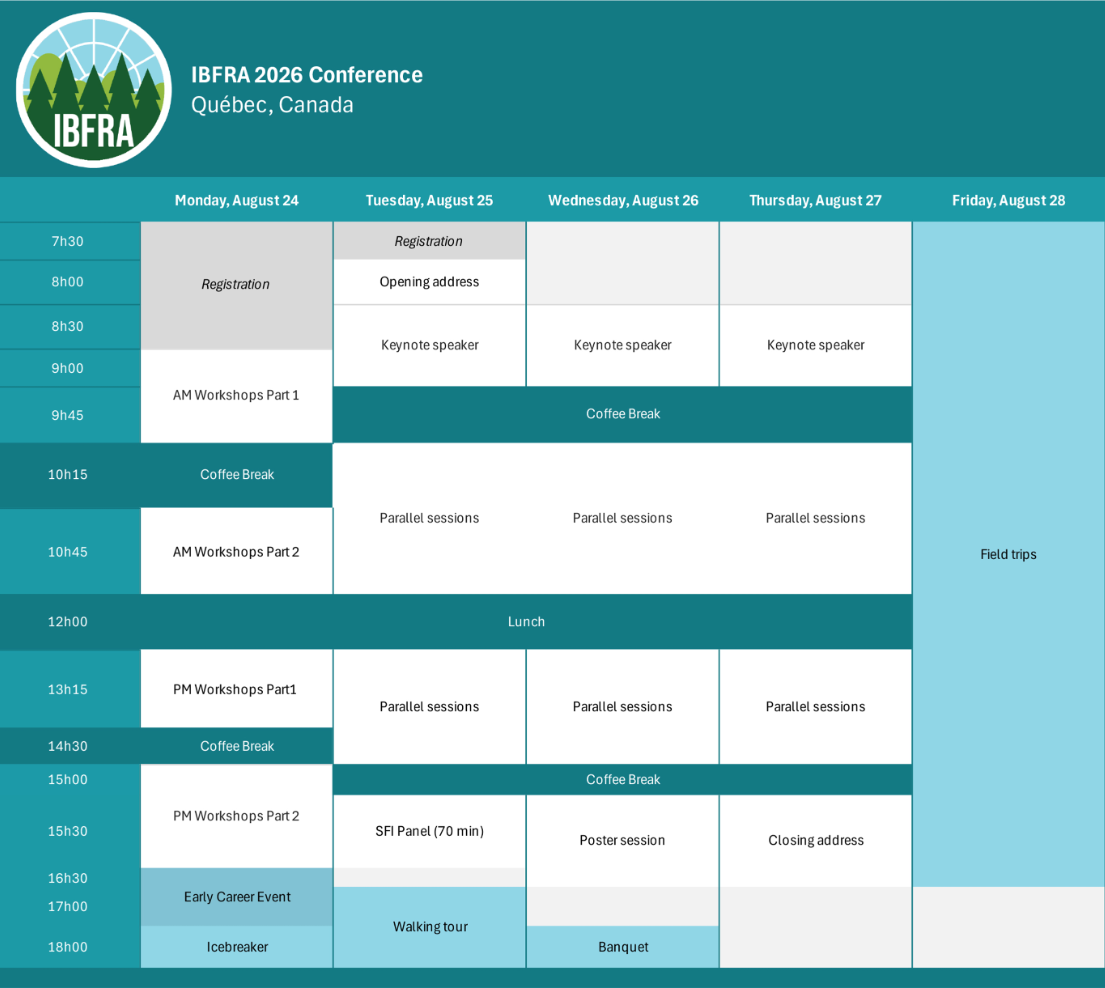
Over the week of August 24 - 28, IBFRA 2026 brought together 286 participants from 15 countries including international leading experts to share the latest science and insights on boreal forest ecosystems, disturbances, and climate change.
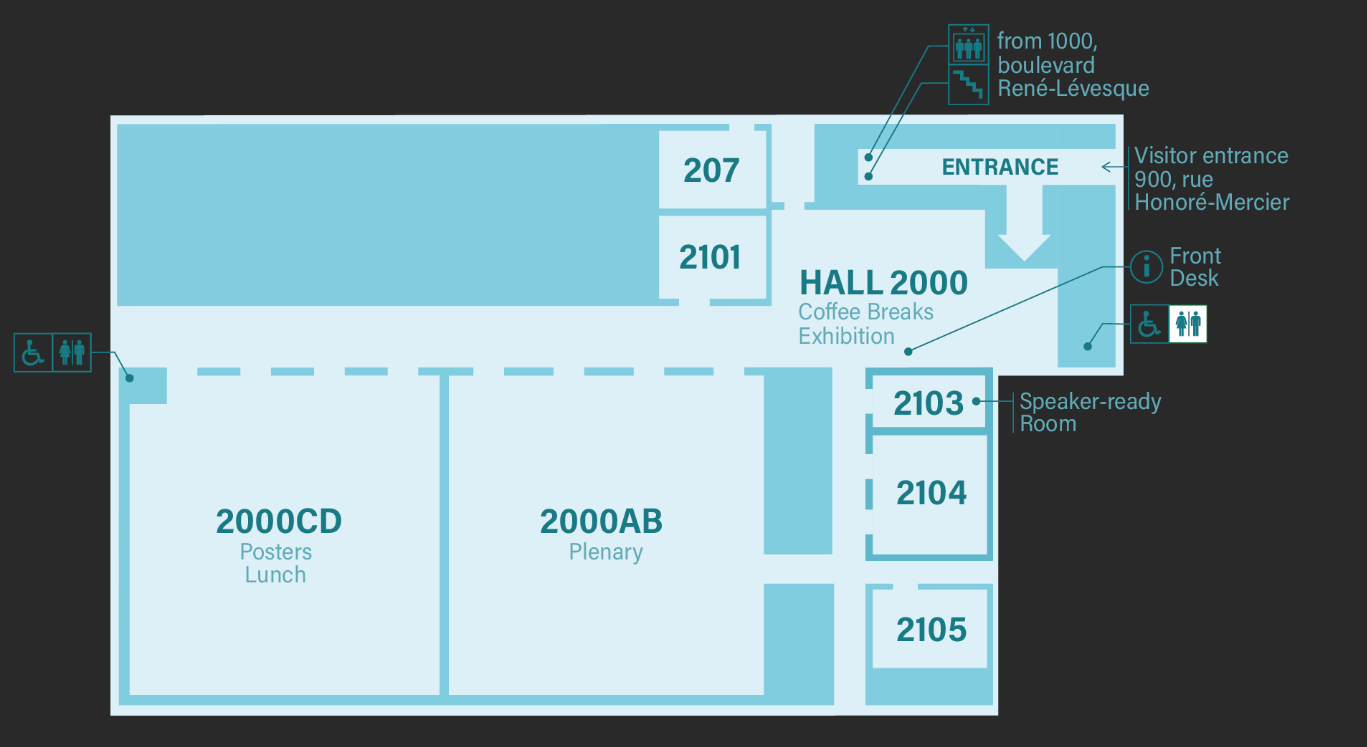
Other event details
-
Workshops at IBFRA 2026 provide opportunities for in-depth learning, discussion, and collaboration on specific topics related to boreal forest research. These interactive sessions may focus on methods, tools, data synthesis, interdisciplinary approaches, or emerging challenges related to disturbance and resilience in boreal forests. Workshops are designed to encourage active participation and knowledge exchange among attendees.
Click here for a full list of the 9 workshops we will have this year.
-
Start the conference on a friendly note with our welcome cocktail dinner on Monday night, 24 August. This informal evening is the perfect chance to meet fellow attendees, reconnect with colleagues, and enjoy light food and drinks in a relaxed atmosphere.
By registering to this event, participants will receive drink coupons to enjoy during the evening, along with a selection of hors d'oeuvres. Guests are welcome to join for an additional fee of 45$, which also includes drink tickets.
-
The early career event is designed to support students and early career researchers through networking, mentorship, and discussion with established researchers and practitioners. This event aims to foster professional development and strengthen connections within the IBFRA community.
-
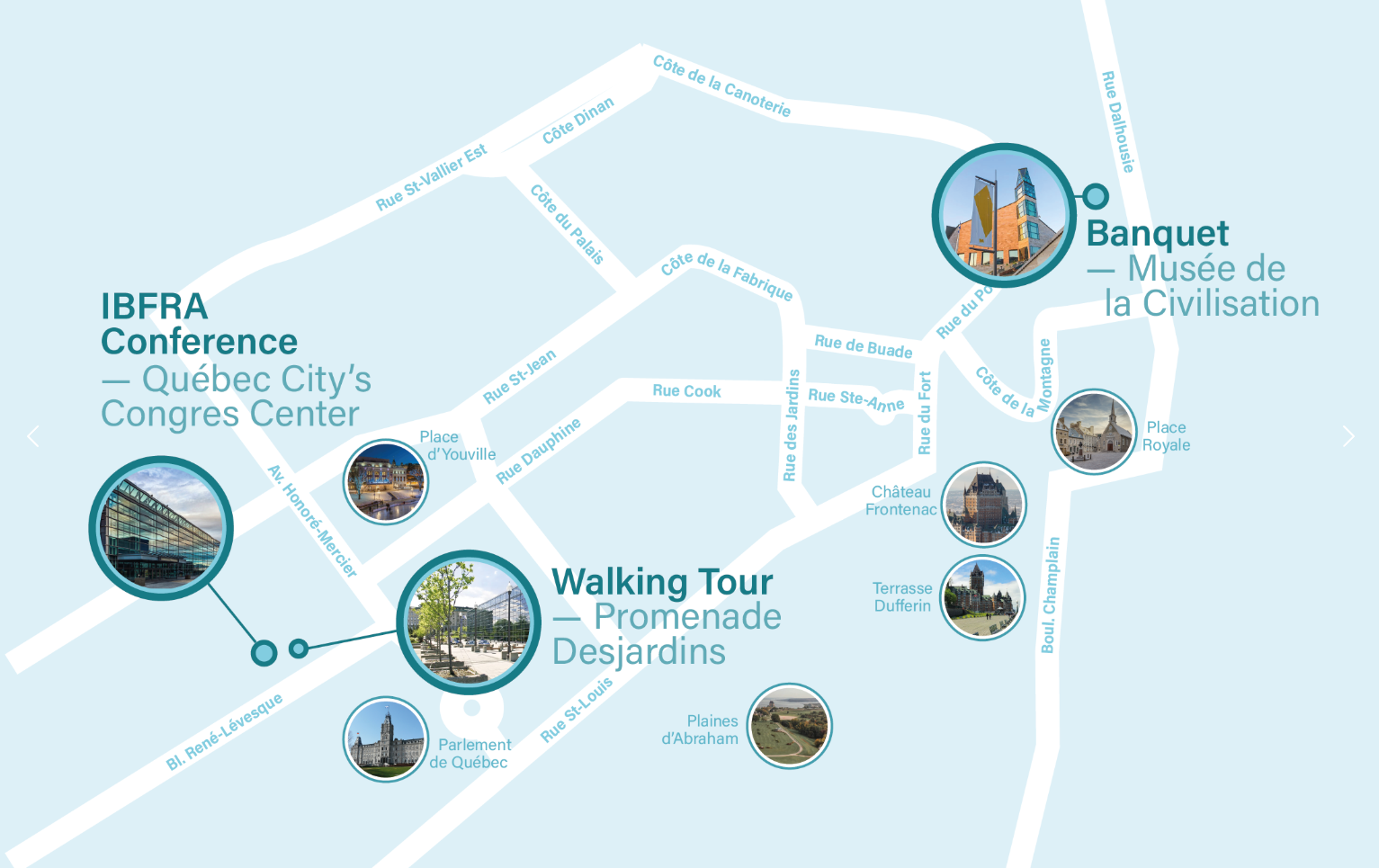
A two-hour guided walking tour of Old Quebec, a UNESCO World Heritage site. Participants will be divided into smaller groups to provide a more personalized experience as we explore the city’s rich history and main attractions.
-
The conference dinner will take place in the Grand Hall at the Musée de la Civilisation (Museum of Civilization) and include exclusive evening access to the exhibit.
This event offers an opportunity to gather in a relaxed setting and connect with colleagues from across the global boreal forest research community. This social evening will celebrate collaboration, shared experiences, and the exchange of ideas in an informal atmosphere.
-
Conference field trips provide participants with the opportunity to explore boreal forest landscapes and management sites near Québec City. We invite you to select one of the three excursions that will highlight regional research, management practices, and ecological processes relevant to the conference theme.
OPTION 1:Disturbances, Biodiversity and Forest Management
Presented by Junior Tremblay & Environment and Climate Change Canada
This field trip will explore how disturbance and management interact to shape boreal forest biodiversity. Participants will visit boreal forest stands affected by hemlock looper outbreaks and discuss how retention strategies implemented during salvage logging have contributed to the maintenance of saproxylic biodiversity (i.e., insects and woodpeckers). The day will also highlight how LiDAR-based predictive models are used to guide conservation and management decisions, with a focus on breeding habitat of an at-risk avian species, Bicknell’s Thrush.OPTION 2: Forest Ecosystem Functioning and Climate Change Adaptation
Presented by the Ministère des Ressources naturelles et des Forêts & Université LavalThis excursion will showcase collaborative field experiments led by researchers from Quebec Government’s Ministère des Ressources naturelles et des Forêts (MRNF) and Laval University. Topics will include monitoring changes in water and energy balances and their effects on forest ecosystems, silvicultural scenarios for adaptation to climate change involving assisted migration in boreal fir forests and the issue of forest degradation. The visit will also showcase different types of partial cutting approaches in natural boreal fir forests.
OPTION 3: Monitoring Environmental and Human Health in a Changing Climate
Presented by Université Laval & Natural Resources CanadaThis field trip will showcase experimental facilities dedicated to monitoring both forest and human health. Participants will begin with two experiments led by Natural Resources Canada: the first simulates climate change conditions in real time by manipulating air temperature and rainfall interception, while the second investigates the effects of plant material inputs on carbon sequestration and nutrient availability. They will then explore the concept of "Sustainable Health", i.e., the interconnection between environmental and human well-being and discover how forest environments may benefit human health through a visit to Vitam's mobile health measurement platform, deployed at the Montmorency Forest, which assesses key health indicators in situ.
Special Collection in the Canadian Journal of Forest Research
Submission opens: 1 September 2026
Submission deadline: 1 September 2027
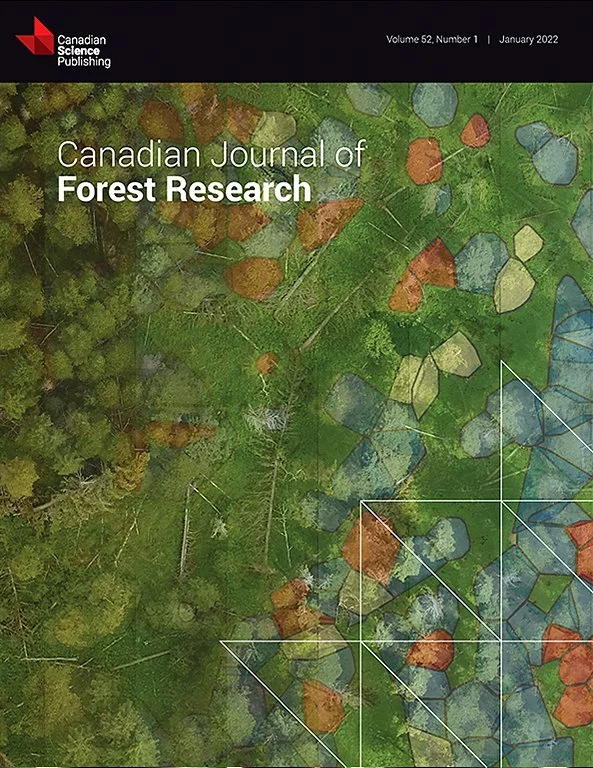
Selected research presented at IBFRA 2026 will be eligible for submission to a special collection of the Canadian Journal of Forest Research. This special issue will highlight high-quality, peer-reviewed contributions that advance understanding of boreal forest ecosystems, disturbance dynamics, and resilience under a changing climate. All submissions will undergo the journal’s standard peer-review process.
Student poster competition for cash prizes by the Journal of Forest Business Research
IBFRA 2026 is excited to collaborate with the Journal of Forest Business Research who is offering three cash prizes of USD$150 for the top student posters. Winners will also have the opportunity to submit an article for publication with no processing or publishing fees. All other IBFRA participants who submit a paper will a 25% discount for first-time submissions as specified here.
About the Journal of Forest Business Research (JFBR): The JFBR is an international peer-reviewed open-access journal devoted to the science of sustainable business within the forest sector. JFBR publishes original research and reviews about forests managed as an investment with a focus on forest investment, finance and business, forest-related industries and wood market dynamics, forest silviculture and management, and forest economics and policy.
JFBR publishes two issues annually, with corresponding issues are released at the end of June and December, respectively. However, all accepted papers are published continuously online. IBFRA attendees are encouraged to visit the journal’s submission portal here and consider submitting manuscripts either before or after the conference.
Submission deadlines: 1 March & 1 September